PSA Cert Lookup: How to Verify Any Graded Card
The PSA cert lookup is the single best fraud protection in the hobby, it’s free, and half of buyers still skip it. Every PSA slab carries a unique certification number, and PSA’s database tells you exactly what card that number belongs to. Thirty seconds of checking beats any amount of regret. Here’s how to use it properly, because “the number returned a result” is not the same as “this slab is real.”
Key Takeaways
- Look up any slab free at psacard.com/cert using the number on the label.
- Verify every field matches: player, set, year, card number, and grade. A result alone proves nothing.
- Sophisticated fakes reuse real cert numbers, so mismatched details are the tell.
- Check the cert before paying, every time, even from sellers you trust.
Table of Contents
How to Run a Cert Lookup
The whole process:
- Find the cert number on the slab label (or scan the QR code on newer slabs).
- Go to PSA’s cert verification page and enter the number.
- Compare the result to the slab in front of you, field by field.
That’s it. The lookup returns the card PSA graded under that number: player, year, set, card number, variety, and grade. Many results include images of the actual slab, which upgrades the check from “matches the description” to “matches the exact card.”
Buying online, run the lookup before bidding, not after winning. On eBay listings, the cert number is usually visible in the photos; a listing that hides it has answered your question already.
Reading the Slab Label
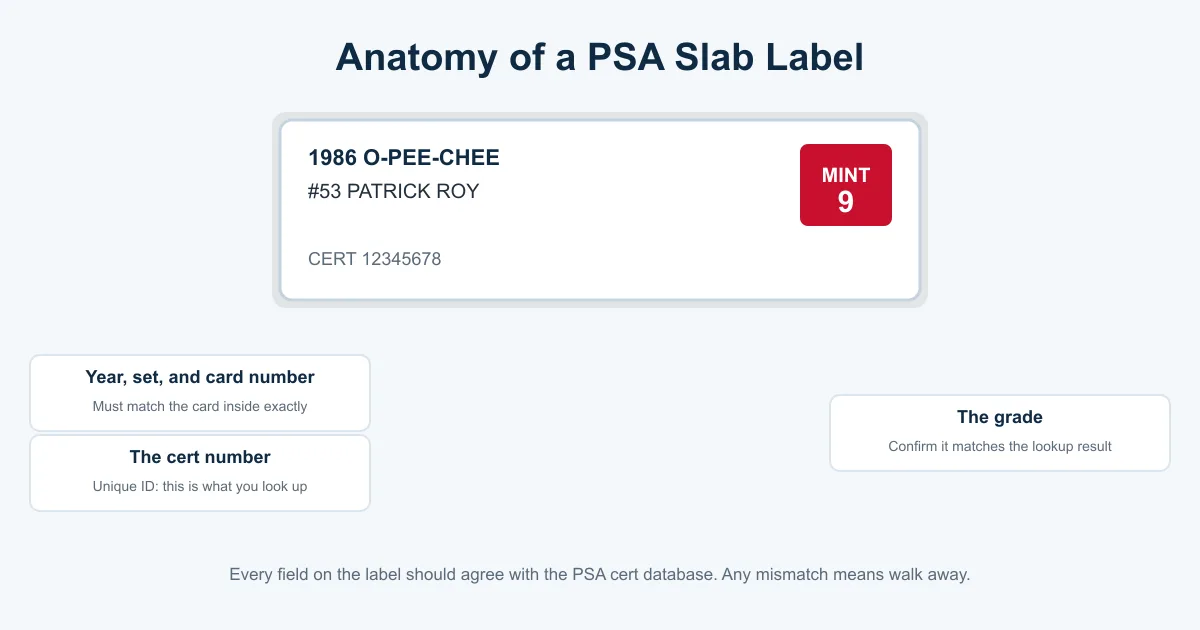
Three zones matter:
- The description block: year, set, card number, player. This must match the cardboard inside the holder exactly. A 1986 O-Pee-Chee label wrapped around a 1987 Topps card is a swap, however nice the card looks.
- The cert number: the unique ID you look up. On modern slabs it pairs with a QR code.
- The grade box: the number and its qualifier (MINT 9, GEM MT 10). Confirm it matches the lookup result, because “label upgrades” are a real counterfeit move: a genuine PSA 8 slab with a forged 10 label is worth several times the real card.
The Verification Checklist
My full pre-purchase routine for any slab worth real money, honed on show floors and eBay wins:
Slab Verification Checklist
Work through it before money moves. All green means buy with confidence.
Fake Slab Red Flags
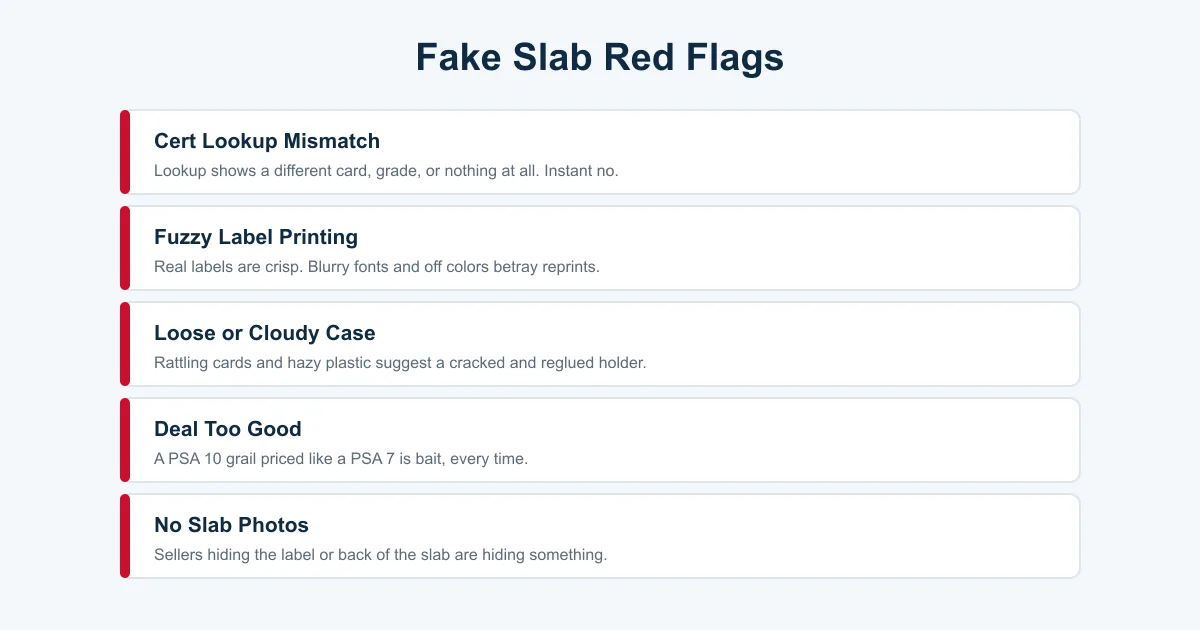
Counterfeit slabs target exactly the cards you’d guess: Gretzky rookies, Cup patches, and the rest of the grail list. The patterns that give them away:
- Reused cert numbers. The lookup returns a real card, just not this one. This is why field-by-field matching is the whole game.
- Label quality. PSA labels are printed crisply on consistent stock. Fuzzy fonts, wrong shades, or misaligned text betray reprints.
- Holder tells. Real slabs are sonically sealed and solid. Rattling cards, cloudy plastic, glue residue, or frosted seams suggest a cracked case rebuilt around a different card.
- The price. A gem-mint star card priced far below its sold-listing range is the oldest red flag in the hobby, and it still works because hope is undefeated.
One more habit worth stealing: for expensive cards, cross-check the PSA population report. If a seller offers a PSA 10 of a card with three PSA 10s in existence, the pop report tells you how extraordinary that claim is, and extraordinary claims deserve extraordinary checking.
What the Cert Page Won’t Tell You
The lookup verifies identity, not value or history. It won’t tell you what the card is worth (that’s sold listings), whether the grade is generous (that’s your eyes), or whether the card was crossed over from another grader chasing a bump. It also can’t verify a slab you never see properly: in-person inspection or sharp photos of front, back, and edges of the holder remain part of any serious purchase, which is exactly the routine covered in the buying guide.
When the Lookup Saves You
Three real situations where thirty seconds of verification does its job, all common enough that I’ve met each one personally:
- The show-floor bargain. A dealer’s PSA 9 vintage star priced 30% under market. The cert came back as a different card number in the same set: a common wearing a star’s label. The dealer “had no idea,” which is always true and never matters. Walk away.
- The auction photo trick. Listings that photograph the slab at angles hiding half the label. The cert number, when finally provided, belonged to a lower-grade copy. Ask for the number before bidding; silence is an answer.
- The trusted-seller slip. Even honest sellers with big inventories occasionally list the wrong slab from a batch. A mismatch here isn’t fraud, just a mistake the lookup catches before it becomes your mistake at resale time.
BGS and SGC Verification
The other graders run the same service: Beckett’s verification tool covers BGS slabs and SGC’s cert lookup covers theirs. The checklist transfers unchanged: look up, match every field, inspect the holder, sanity-check the price. Whichever slab is in front of you, thirty seconds of verification is the cheapest insurance this hobby sells. Skipping it is how collectors end up owning a real slab of the wrong card, and there’s no lookup that fixes that.
Verification tools and slab features evolve. When in doubt on a big purchase, buy through channels with authentication guarantees. Not financial advice.
Frequently Asked Questions
How do I look up a PSA cert number?
Go to psacard.com/cert, enter the cert number printed on the slab label, and PSA returns the card it graded under that number: player, set, year, card number, and grade. The lookup is free and takes seconds.
Where is the cert number on a PSA slab?
On the label inside the slab, usually below the card description. Newer slabs also carry a QR code that opens the cert page directly, plus anti-counterfeit features in the holder itself.
What if a cert number does not match the card?
Walk away. A mismatch between the lookup result and the physical card means a counterfeit label, a swapped card, or a tampered slab. Legitimate sellers will not argue with a failed verification.
Can fake PSA slabs pass the cert lookup?
Sophisticated fakes reuse real cert numbers from real cards, which is why you verify that every detail matches: player, set, year, card number, and grade, not just that the number returns a result.