Where to Buy Hockey Cards: Online and Near You
Buying hockey cards in 2026 means choosing between eBay, consignment sites, your local card shop, card shows, and the retail shelf. Each one is the right answer for a different purchase, and each has a way of separating rookies (the collector kind) from their money. Here’s how I decide where to buy, after a decade of doing it in every venue.
Key Takeaways
- Buy singles on eBay, wax at retail or your local shop, and bulk on consignment sites like COMC.
- Always check sold prices before paying: the asking price is an opening offer, not the market.
- Card shows reward patience and late-day negotiation.
- Verify every graded card through the grader's cert lookup, and walk away from too-good deals.
Table of Contents
The Five Places to Buy, Compared
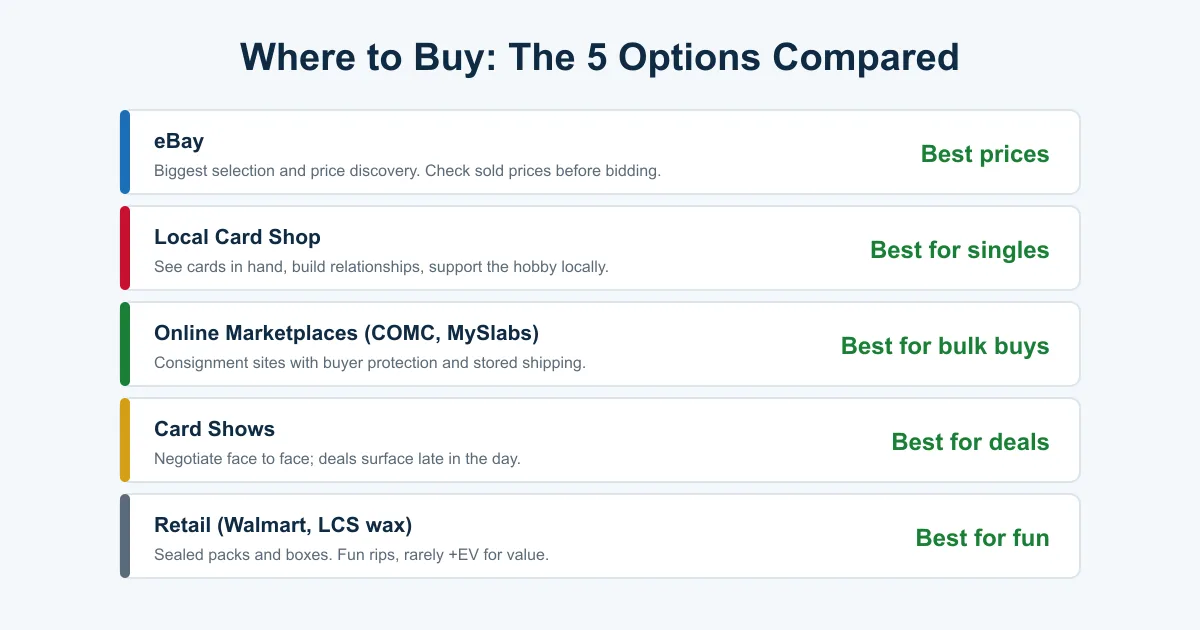
| Venue | Best For | Watch Out For |
|---|---|---|
| eBay | Specific singles, graded cards, price discovery | Fakes on high-end cards, inflated asking prices |
| Local card shop | Singles in hand, supplies, community | Thin hockey inventory outside Canada, shop markup |
| Consignment (COMC, MySlabs) | Bulk buys, low-cost commons, set filling | Shipping costs, slower delivery |
| Card shows | Negotiated deals, vintage browsing | Cash-only tables, impulse buys |
| Retail (Walmart, grocery) | Sealed packs and blasters for fun | Pack searching, terrible odds of profit |
Buying Online: eBay and Consignment
eBay is the default for a reason: the deepest hockey inventory anywhere and transparent pricing through sold listings. My rules for buying there:
- Check solds before bidding. Use the sold-listings method so you know the real price before the auction adrenaline hits.
- Prefer auctions for buying, Buy It Now for convenience. Auctions ending at awkward hours are where deals live.
- Set alerts with saved searches. The card you want at the price you want eventually appears; the alert catches it.
COMC (Check Out My Cards) and similar consignment marketplaces shine for bulk: commons, set needs, and low-value singles ship together for one fee, which eBay can’t match card for card. I use COMC when filling out a set or grabbing ten $3 cards without paying ten shipping charges.
Buying Locally: Shops and Shows
A good local card shop earns its markup. You inspect condition with your own eyes before paying (huge for raw vintage), you get cards today, and shop regulars hear about collections before they hit eBay. Here in Vancouver I treat my LCS as part supplier, part scouting network; if you’re anywhere in Canada, hockey inventory will be strong. In US markets outside hockey cities, expect thinner selection and check the shop’s case before assuming.
Card shows are the other local play, and they reward technique:
- Go late. Dealers negotiate hardest in the last hour rather than pack inventory home.
- Bundle. Three cards from one table gets a better price than three separate purchases.
- Bring solds. Pull the recent sold prices up before you haggle; dealers respect a real number and dismiss a vibe.
- Bring cash. Some tables are card-only, and cash still unlocks discounts at plenty of them.
Singles vs Packs
The math every new collector needs once: packs are priced above the expected value of their contents. The manufacturer’s margin, the distributor’s margin, and the retailer’s margin all live inside that price. If you want a specific card, buying the single always beats gambling on pulling it.
So why does anyone buy packs? Because ripping wax is genuinely fun, and fun is a legitimate thing to pay for. My rule: buy packs with entertainment money, buy singles with collection money, and never confuse the two budgets. If you’re deciding what sealed product is actually worth ripping, watch the market first via the news feed, where box prices and big pulls tell you what’s hot.
How to Avoid Fakes and Overpaying
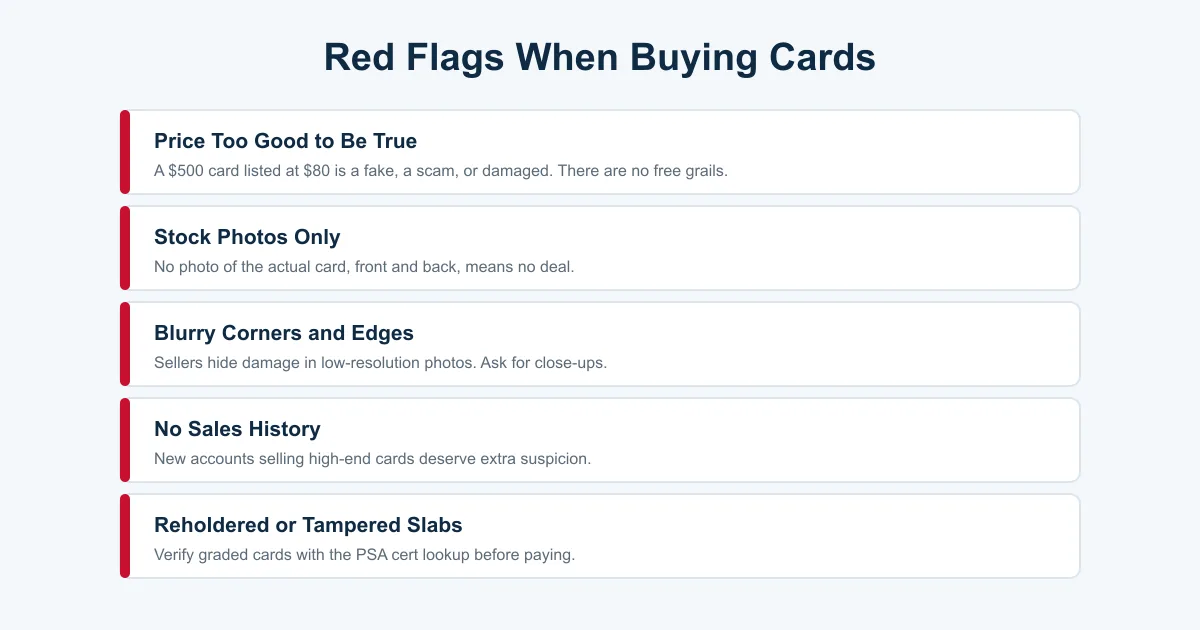
Fakes cluster around exactly the cards you’d expect: Gretzky rookies, Cup patches, and everything else on the most-valuable list. The defenses:
- Verify every slab. Punch the cert number into the PSA cert verification (or BGS equivalent) and confirm the label matches the card. Reholdered fakes fail this check constantly; the full cert lookup guide covers the complete verification routine.
- Demand real photos. Front and back of the actual card. A stock photo listing for a valuable card is a no.
- Price sanity check. A $500 card at $80 is fake, stolen, damaged, or bait. There are no free grails, only free lessons.
- Buy the seller too. History, feedback, and responsiveness. A new account selling high-end hockey is a coin flip you don’t need.
Overpaying is the quieter risk. The fix is always the same boring habit: sold listings first, every time, even when the card is shouting your name.
Which Option Fits You?
Where Should You Buy?
Answer two questions, get the right venue.
Whatever venue you choose, the process stays the same: know the card, know the sold price, inspect what you can, and verify what you can’t. Do that and every one of these five venues is safe; skip it and none of them are. When you’re ready to move cards the other direction, the selling guide is the mirror image of this one.
This is a hobby resource, not financial advice. Prices and venue fees change; verify before you buy.
Frequently Asked Questions
Where can I buy hockey cards?
The main options are eBay for selection and price discovery, local card shops for singles you can inspect in hand, consignment marketplaces like COMC for bulk buying, card shows for negotiated deals, and retail stores for sealed packs and boxes.
Where can I buy hockey cards near me?
Search for local card shops, check whether your city has a monthly card show, and look for hobby sections at Walmart or grocery stores. Facebook groups for your city or region often surface local sellers and meetups too.
Is it cheaper to buy singles or packs?
Singles, almost always. Packs are priced above the average value of what is inside them. If you want a specific card, buying the single costs a fraction of pulling it. Buy packs for the fun of ripping, not for value.
How do I avoid fake hockey cards?
Buy from sellers with history, insist on photos of the actual card front and back, verify graded cards through the PSA or BGS cert lookup, and treat too-good prices on star cards as the scam they almost always are.